
Audio Synchronisation Review: What the Second Visit to the Gallery Covers
After the first survey comes the measured work: timing checks through mixers, embedders and playout, and a written report your engineers can act on without a further visit.
6 minutes to read
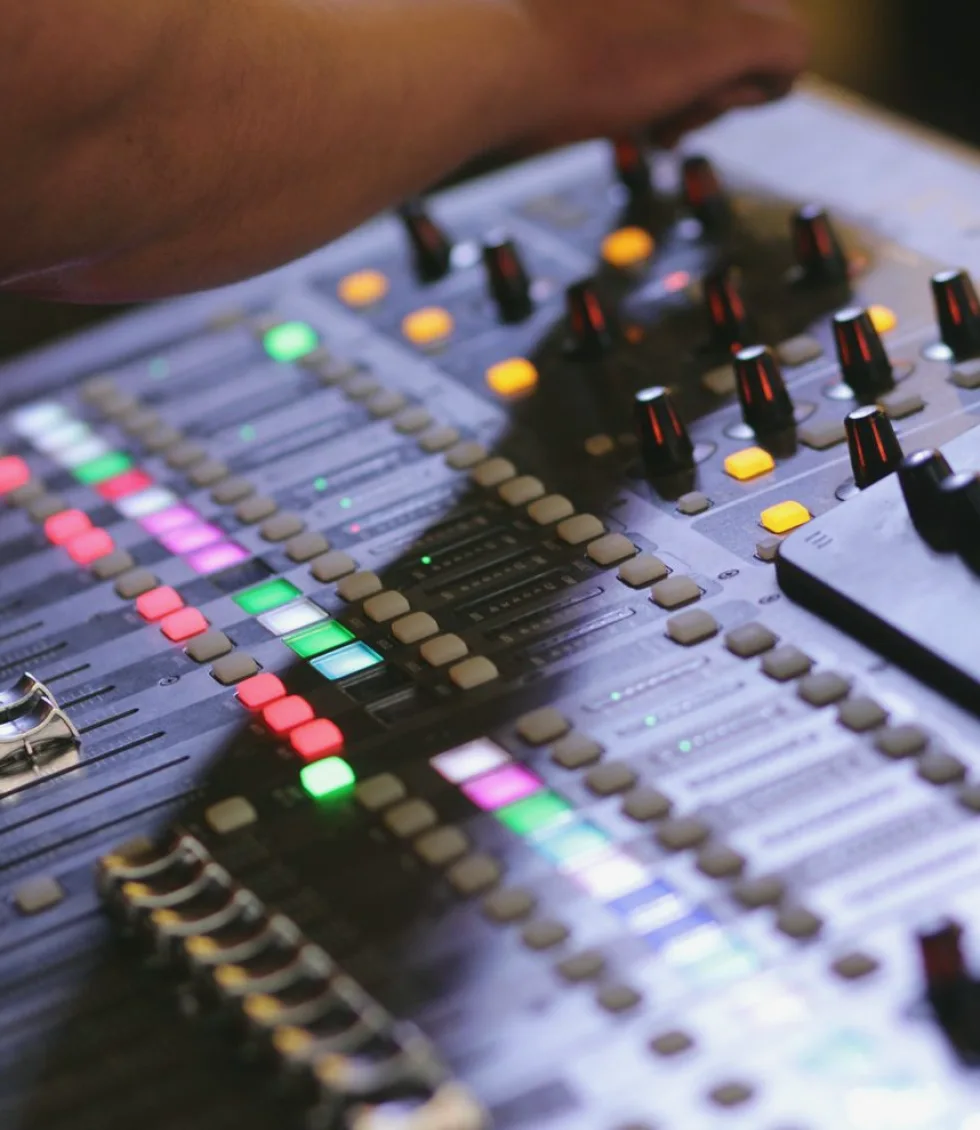
Where the review picks up after the first survey
The first part of an Audio Synchronisation Review is a paper exercise and a walk through the building. We collect signal flow diagrams, note which devices carry sound and picture, and talk to the people who notice problems first, usually the gallery team or the transmission desk. That visit tells us where to look. It does not tell us how far sound and picture have drifted, and that is what this article is about.
The second stage is measurement. We return with test signals and a short list of points in your chain where timing is likely to change: after the mixer, at the embedder, through any frame synchroniser, and at the playout output. Each point gets a reading, written down in milliseconds or frames, so that the report states a number rather than an impression such as sounds a bit late.
Studios often ask whether this can be done remotely. Some of it can, if you send us recordings from the chain. Most of the useful findings, though, come from standing in the room with the equipment switched on and the real routing in place.
Measuring lip-sync through the chain
We start with a test pattern that pairs a visible flash with an audible tone, sent from the source through to the final output. Comparing the two at each stage shows where the offset appears and whether it grows or stays constant. A fixed offset is usually a delay that was never compensated. A drifting one points to something more awkward, such as a sample rate mismatch or a buffer that is filling slowly.
Where a reading looks wrong, we repeat it with a different source, since a fault that follows the source is a different problem from one that follows the path. This sounds obvious, but it saves a good deal of time spent blaming a device that was fine all along.
We also check lip-sync with real programme material, a presenter on camera speaking to a script. Test signals can pass while a live face still looks wrong, because the eye and ear are more forgiving of some errors than of others.
- Flash and tone test from source to output
- Repeat readings with a second source
- Check against live speech on camera
Mixers, embedders and the delays nobody wrote down
Digital mixers add processing delay, and the amount varies with the sample rate, the number of channels in use and which effects are engaged. A desk that is in sync on a quiet rehearsal can be a frame out during a busy show if an extra processing block has been inserted on a few channels. We ask crews to run the desk in its fullest realistic configuration during the measurement for exactly this reason.
Embedders and de-embedders are the next suspects. They place audio into the video signal and take it out again, and each pass can introduce a small offset depending on how the equipment handles the audio packets. Where several of these sit in series, small offsets add up.
Many sites have a settings sheet that records the delay values someone entered years ago. We compare those values with what we measure. The two rarely match exactly, and the difference is often the explanation for a complaint that has been circulating for months.
Playout chains and what happens after the gallery
Sound and picture can leave the gallery in perfect time and still arrive apart. Playout servers, encoders and distribution links each handle audio and video along separate internal paths, and the processing time for the two is not the same. We measure at the playout output as well as the gallery output, and where you can give us access, at a monitoring point further downstream.
Recorded inserts deserve a separate look. A clip prepared in an edit suite may carry its own offset from the way it was exported or ingested, and it can sit perfectly well on the timeline until it is played out next to live material.
Where the fault lies outside your premises, with a distribution partner for example, the report says so and includes the readings you would need to raise it with them. We do not guess at equipment we have not measured.
- Compare gallery output with playout output
- Test recorded inserts alongside live sources
- Record readings you can pass to an outside partner
What you receive when the work is finished
The result is a written report. It lists each measurement point, the reading found, the reading expected and the adjustment we recommend. Recommendations are specific: set this delay to this value on this device, or replace this routing step with a direct connection. Where more than one fix is possible, we say which we would choose and why.
We also provide a short procedure your engineers can repeat, so that the same checks can be run after a firmware update, a new piece of equipment or a change in the signal path. A review that cannot be repeated by your own staff soon loses its value.
Where changes are made during the visit, we record the values before and after. Many teams find that having the original figures on paper is as useful as the corrected ones, since it shows how the drift came about.
Preparing for the visit
A little preparation shortens the visit and makes the readings more reliable. Send a current signal flow diagram if you have one, even a rough sketch, along with a list of the equipment in the audio and playout path and the sample rate and frame rate you normally work at. If you know of a specific programme or source where the fault is worst, tell us.
On the day, we need access to the gallery and the equipment room, and a few hours when the chain can be taken off air or run on test signals. Your own engineer sitting alongside is welcome and helpful, since they know which quirks the system has.
If your plant changes often, mention it. A review is a snapshot, and knowing which parts are likely to move helps us decide where to measure most carefully and what to put in the repeat procedure.
- Signal flow diagram or sketch
- Equipment list with sample and frame rates
- Details of the worst-affected programme or source
An Audio Synchronisation Review ends with numbers, not opinions: where sound and picture part company, by how much, and what to change. The measurement stage is where most of the value lies, and the report is written so that your own team can keep the chain in time afterwards. If lip-sync has become a recurring complaint, the contact page is the place to start the conversation.
Ask for a quote
- Phone
- 01223 480162
- Write to us
- [email protected]